Performance
My Process:
Research, Trials and Final Demonstration
Stage 1: Research
Conception
For this stage of the project, I discussed possible directions for me to explore and how the process of bringing all elements together would work. The general direction is the fusion of gospel vocals and granular processing, while also using this project as an opportunity to learn Ableton Live and use performative equipment to create a playable space for the performance to take place on.
Research for this project was difficult due to the minimal research found in this particular area. The unique amalgamation of gospel vocals and creative gestural granular processing proved to be a very niche combination. To maximise my scope, I broke the research into adjacent areas: vocal registers, harmony arrangement, and granular processing.
Vocal registers:
Vocal coaches such as Cheryl Porter break down some of the vocal registers in a short demonstration. Click link below for Cheryl Porter's demonstration
Link:
https://www.youtube.com/watch?v=nAIP7HMa6Co
Porter demonstrates the vocal registers I plan to utilise within for the next stage of this project.
Tone:
Tone is an additional aspect of vocal performance that I wanted to incorporate for this project. Vocal performers such as Layla Hathaway
Link:
From 1:54 – 2:40 highlight Hathaway’s solo in which she demonstrates her low set tone and airy quality that make her voice stand out. When she sings the line “You feel far away” between 2:35 and 2:40, she demonstrates the transition between head and chest vocal registers while maintaining that breathy, airy tone. Another example of this airy quality demonstration is Jacob Collier. Particularly in the first verse of his song, ‘Little Blue’. He has this same breathy tone that Hathaway demonstrates. This provides a male example of how this airy quality presents in a naturally lower vocal range.
Link:
https://open.spotify.com/album/1vAsPmIGCKf9Pt2p4feAfa?trackId=0HWWt7Nv69TSuaVc5Woy7O
Stage 2: Prototype
Trials
By this point in the project, I had finalised the project objective, the vocalists, the software I would be working in and the performative equipment I would be using. I would make this project a family affair and use my voice alongside my siblings’. I concluded that I would use this project as an opportunity to learn Ableton Live and explore granular processing. For the performative equipment, I would use Novation’s Launch Control XL MK 2 and Launchpad Mini, which were available for booking at the assets store. Given the lack of specific references for granular processing with gospel vocals, I expanded my search parameters and looked for vocal registers, vocal harmonic arrangements, and granular processing.
General structure:
After the demonstration draft, I decided that I wanted the vocals to be the only thing that is modulated in order to keep it within the confines of vocal manipulation, degradation, and performance. Firstly, I will introduce the individual harmonic components, beginning with the melody and ending with vocal embellishments and runs, making use of the Launchpad sample playback feature, using spatialisation effects such as delay and reverb to add further dimension and movement to the overall shape of the piece. In the latter half of the performance, I will lean more into the granular processing of the combined vocal piece and navigate the Launch Control-mapped modulation features.
Equipment list:
- Lanuchpad Mini
- Launch Control XL MK2
- C414 condenser microphone
- XLR cable
Software:
- Ableton Live 12
Primary modulation tool:
- Granulator 3
Lyric-less delivery - I chose to take some inspiration from Hans Zimmer’s ‘Deliver Us’ from the animated DreamWorks movie ‘Prince of Egypt’. 4:28 – 4:40.
The expression and harmonic arrangement were inspired by Kirk Franklin's documented rehearsal of his song ‘Able’.
The dynamic range aspect of my vocals is inspired by the dynamic range of Richard Smallwood’s ‘My Everything’.
The breathy/airy quality incorporated into this vocal piece was inspired by Jacob Collier's ‘Little Blue’ and Laylah Hathaway in Kirk Franklin’s ‘When’. From 2:35 and 2:40.
The granular effect that Aphex Twin achieves in his track ‘Afx237 v.7’ is something that partially inspired the exploration of granular processing on vocals.
Stage 2: Prototype - Inspo
Lyric-less
Harmonic arrangement
Dynamics
Vocal Delivery
Vocal Delivery
Granular Modulation
Stage 2: Prototype (Vocal rehearsals)
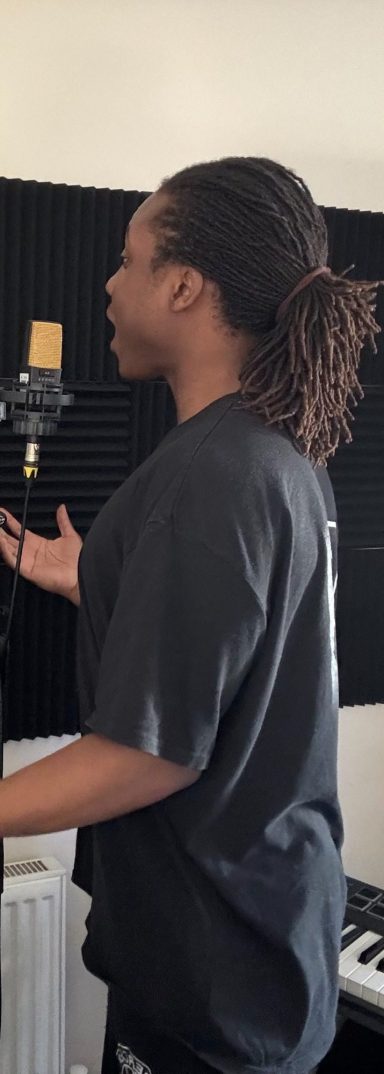
This stage consisted of directing and recording the vocal components that I would use for this project.
Soprano - Male
Alto - Male
Tenor - Male
Bass - Male
Lorem ipsum dolor sit amet, consectetur adipiscing elit. Nulla euismod condimentum felis vitae efficitur. Sed vel dictum quam, at blandit leo.
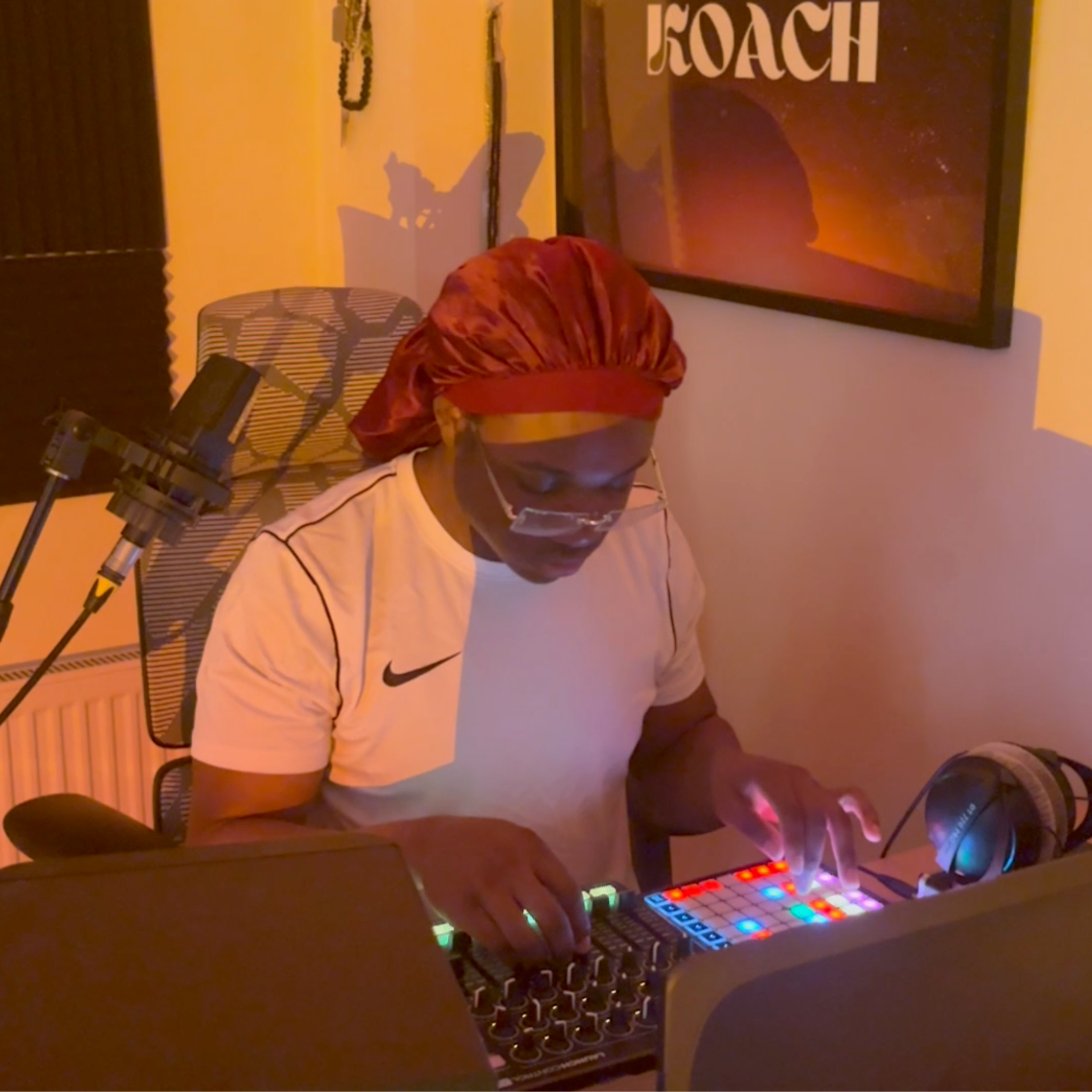
Angle 2 – This angle was slightly better, further up, allowing for the visibility of both the Launchpad and Launch Control in the shot.
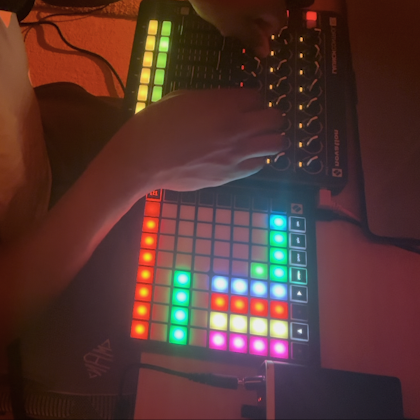
Angle 3 – This angle worked the best, allowing me to see the control modules clearly.
Stage 2: Prototype - Demo 1
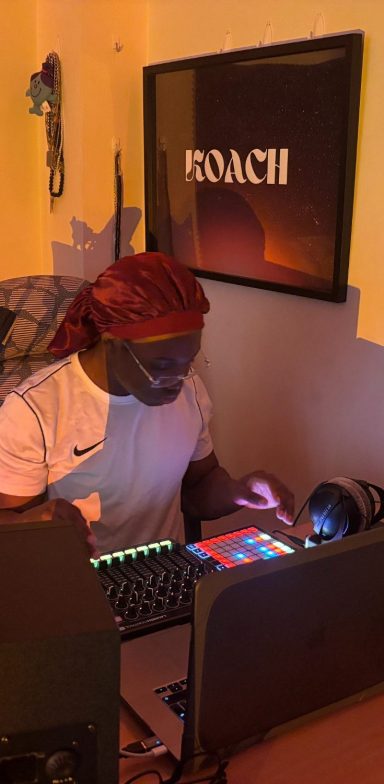
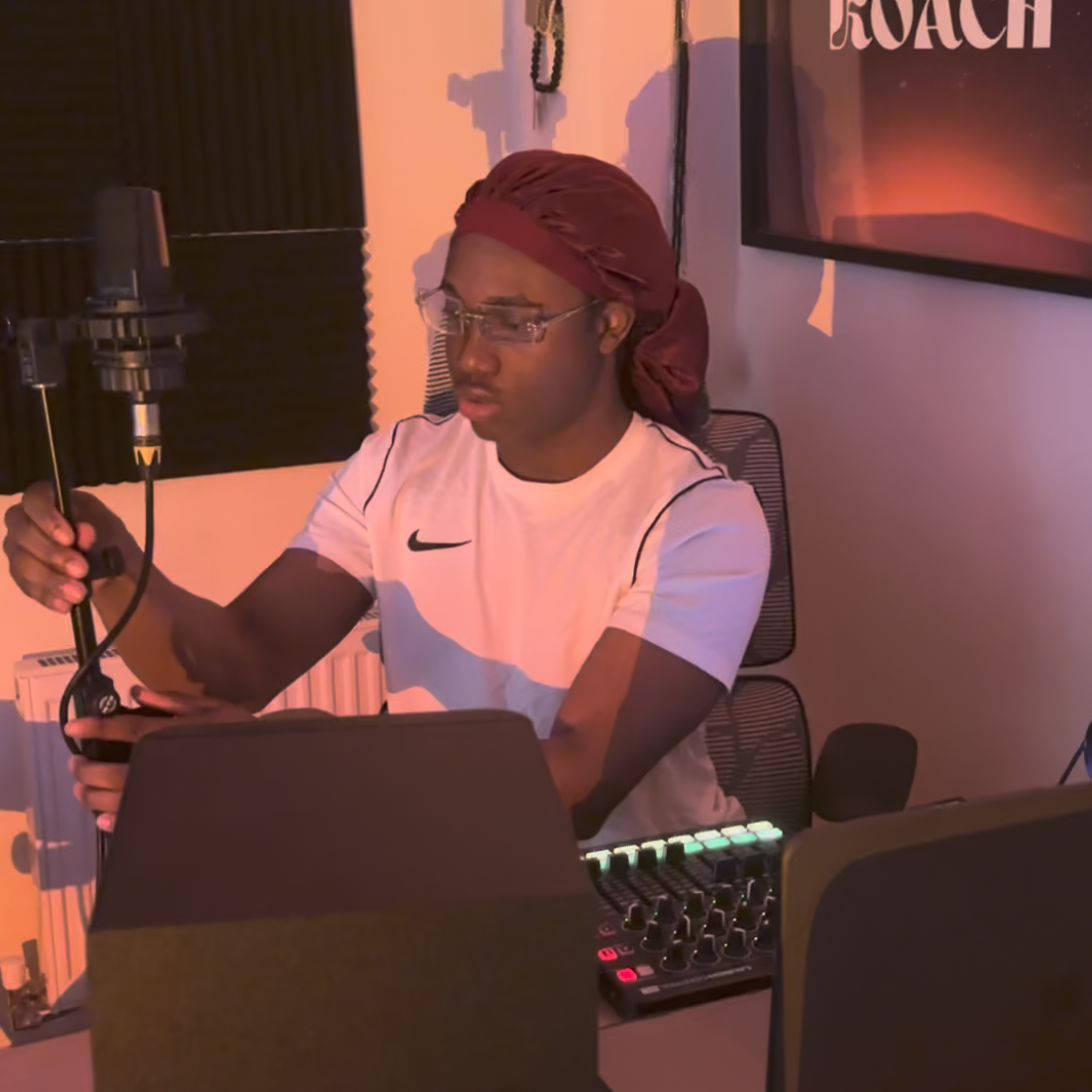
This stage follows after the vocal session. Once all the vocal components had been recorded, I then had a short draft deomstration. The purpose of this demonstration was to clarify more of a structure for the final performance. This was also where I tested out different angles, perspectives and lighting for the final performance.
Stage 3: Final Performance
The final performance ended up being roughly 16 mins in length. I have 2 perspectives within this performance. The first perspective is the camera, the second is inside the project session itself. I did not lean too heavily into the visual storytelling; however, I did want to try and maintain viewer engagement, so I switched between perspectives until the latter half of the performance. I edited this performance using Adobe Premiere Pro to sync up the two perspectives with the audio.
Reflections:
I think that this project has given me a creative way of generating unique material that can be used for future opportunities. Exploring these subject areas was more difficult than expected, given the time necessary to understand how to use Ableton on a functional level.